




Menopause is when your periods stop for 12 months in a row. It is a normal stage of life that every woman goes through. Symptoms vary from person to person.
What is Menopause?
You reach menopause after 12 months in a row with no period, including no spotting. After menopause, your ovaries make very little estrogen and progesterone, and they stop releasing eggs.
The transition into menopause usually happens between ages 45 and 55. In the United States, the average age of menopause is 52.
If you have surgery to remove both ovaries, menopause starts right away. Learn about early or premature menopause.
What is perimenopause?
Perimenopause is the time before menopause when your hormone levels change. Your periods may become irregular during this time, but you can still become pregnant.
Perimenopause usually begins in your mid- to late 40s. However, some women notice symptoms in their mid- to late 30s. Perimenopause lasts about four years on average but can last up to 10 years leading into menopause.
How do hormones affect your body?
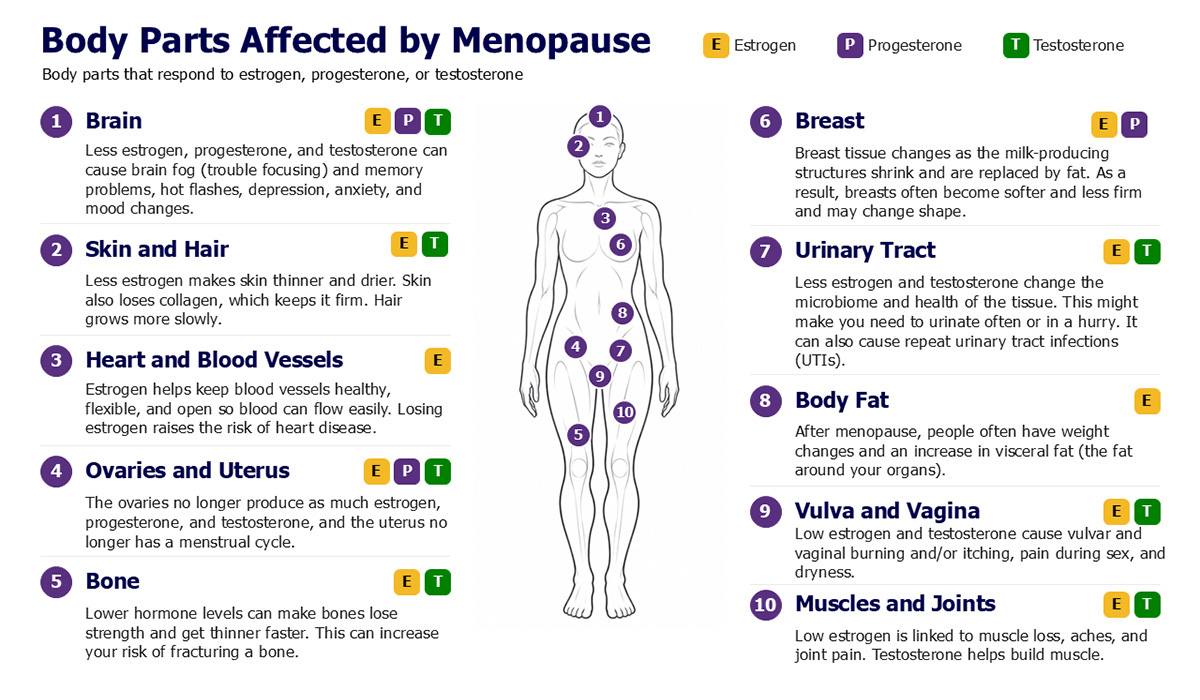
Estrogen, progesterone, and testosterone act in nearly every system of your body. Their levels decrease during perimenopause and after menopause.
That is why menopause can affect your sleep, mood, hair, skin, bones, joints, muscles, bladder, genital tissue, and weight.
 View image
How do you know if you are in perimenopause?
Your health care provider can usually determine whether you are in perimenopause from your age, your symptoms, and changes in your periods. Blood hormone tests are not usually needed.
Track your periods and symptoms and share the information with your provider. If your periods stop before age 40, you can ask about testing.
Do you still need birth control?
Yes. You can get pregnant during perimenopause, even if you skip periods. Talk to your health care provider about the need for birth control. Menopause does not protect you from sexually transmitted infections (STIs). Learn about safe sex after menopause.
What happens after menopause?
You no longer have periods and cannot get pregnant. Some symptoms get better over time, while others stay the same or get worse. Hot flashes and night sweats last 7 to 12 years on average, and longer for some women. Without treatment, genital and urinary symptoms, including repeat urinary tract infections (UTIs) may get worse over time. Your bone density also continues to decrease after menopause, which raises your risk of osteoporosis and broken bones.
Vaginal bleeding after menopause is not normal. See your health care provider right away if you experience this.