




Our National Women's Blood Pressure Awareness Week (NWBPAW) Toolkit is your go-to resource for shining a light on the importance of preventing and managing high blood pressure for all women.
Designed with the women's health community in mind, all materials are free of charge, copyright-free, and ready to be shared with your audiences and across your platforms. They are easily downloadable and shareable and can be personalized to fit your messaging needs.
How to Use the Toolkit
- Explore the resources. Look through the materials for the best tools to serve your audience and community.
- Download and share the resources. Access the NWBPAW 2026 resources and share them widely. These resources are free to use and copyright free.
- Promote the resources on social media. Use the ready-made graphics and posts on your social media channels. Don't forget to use the hashtag #NWBPAW to reach a broader audience.
- Start with one action. Review the toolkit, choose the resources most relevant to your setting, and identify one prevention activity to implement this month.
- Tag us! Don't forget to tag the Office on Women's Health (OWH) on social media so we can cross promote your messaging.
- Facebook: @HHSOWH
- X: @womenshealth
- LinkedIn: @HHS Office on Women's Health
Sample Social Media Messages
OWH has developed a series of messages for use by federal partners and non-federal collaborators to use across their social media channels to uplift the messaging of NWBPAW. Explore the messages and tag @HHSOWH on Facebook, @womenshealth on X, and @HHS Office on Women's Health on LinkedIn.
Shareable Graphics
To save the graphics below, click “View Image” under the graphics to access the full-size version, right click or hold on the image, then save to your device. You can also access and share the graphics by visiting the OWH 2026 NWBPAW Pinterest board. Feel free to use the sample social media messages above to accompany the graphics.
 View image
 View image
 View image
 View image
 View image
 View image
 View image
 View image
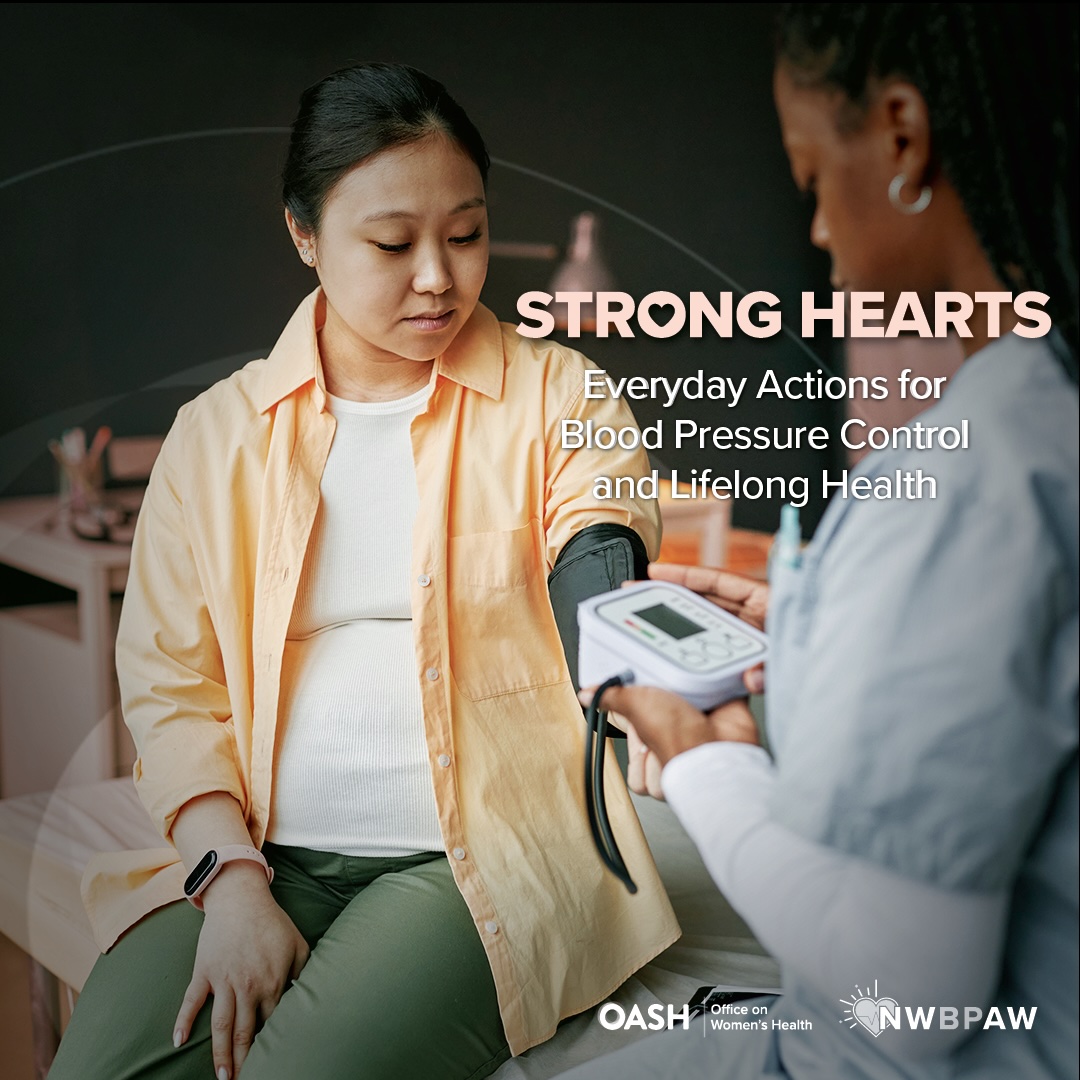 View image
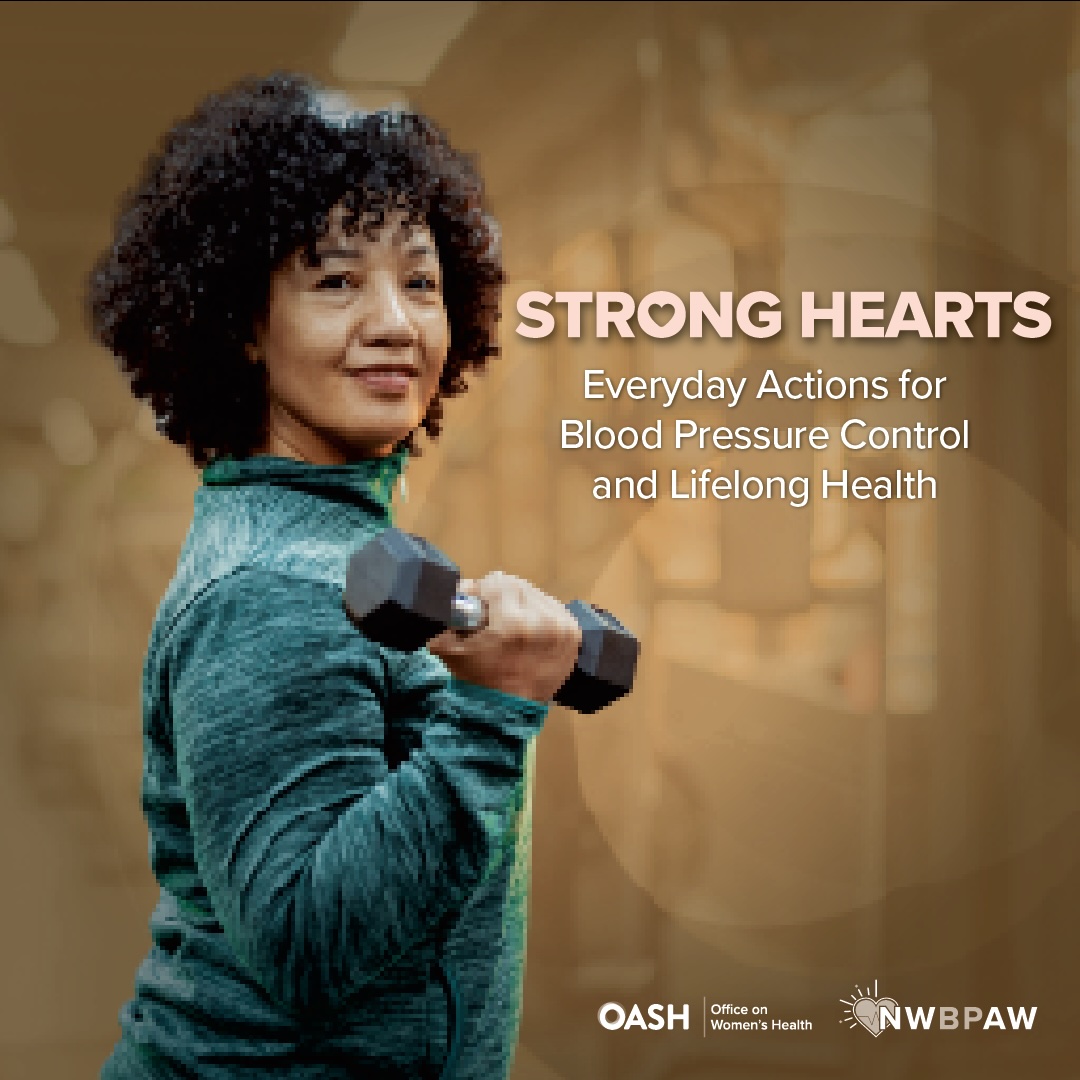 View image
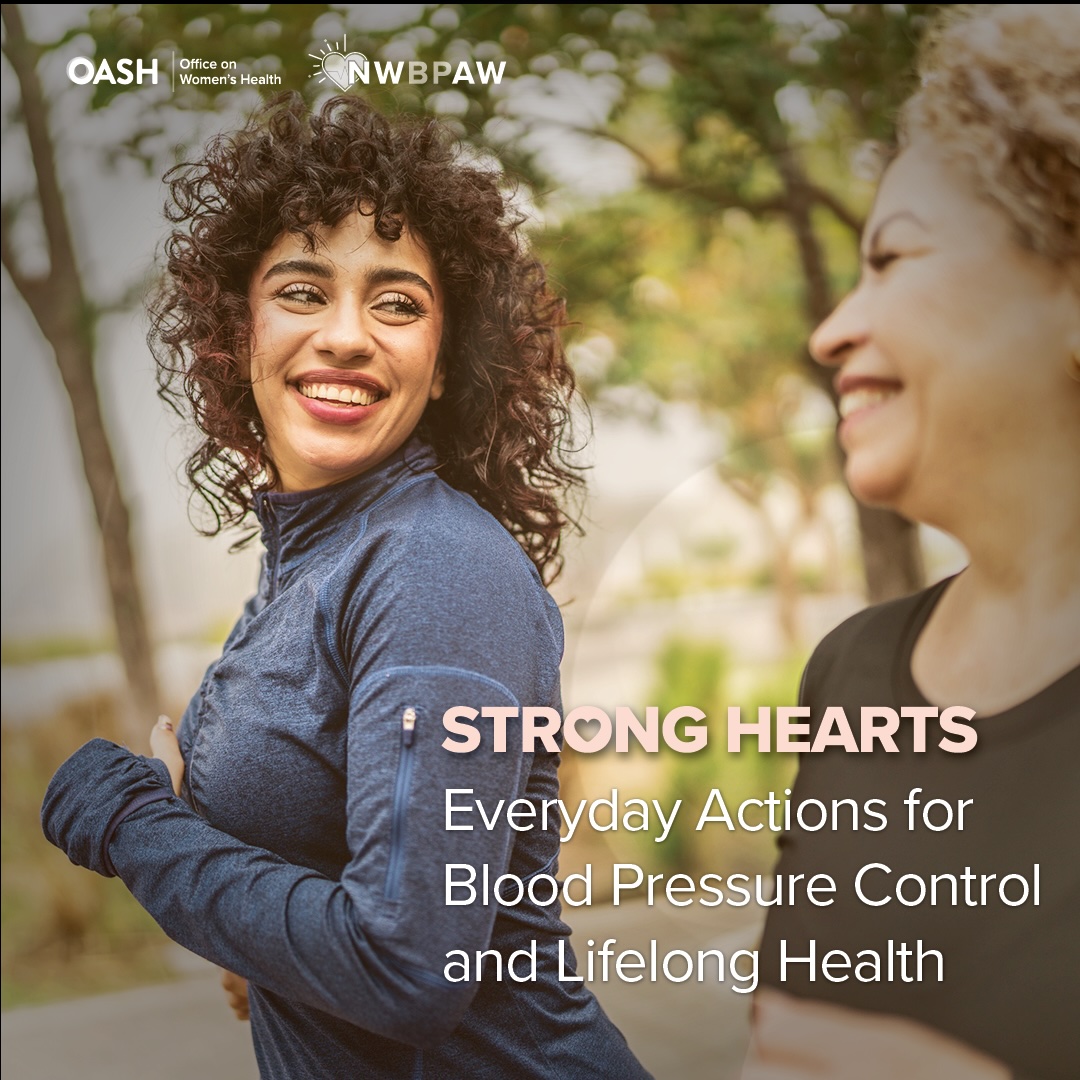 View image
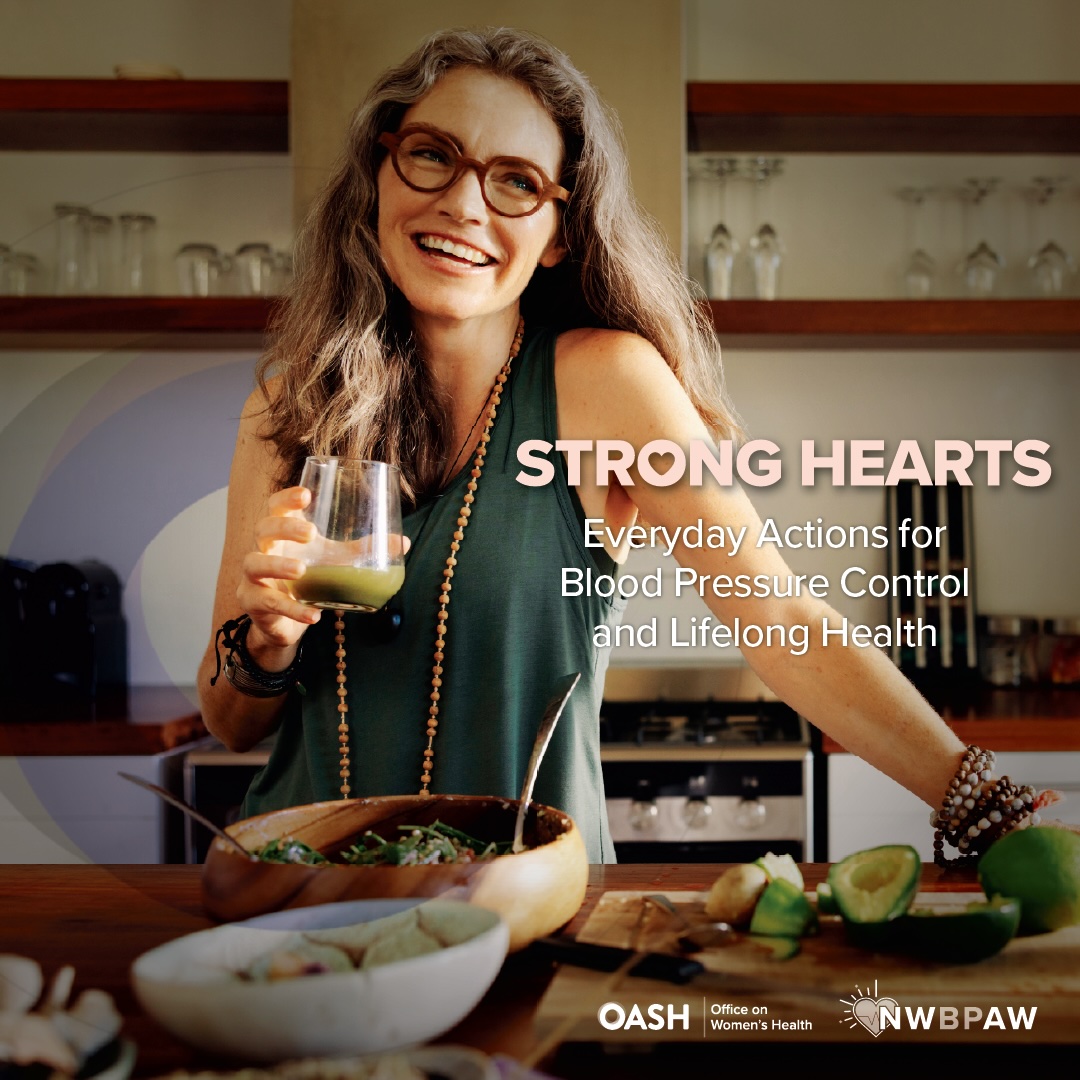 View image
 View image
 View image
 View image
 View image
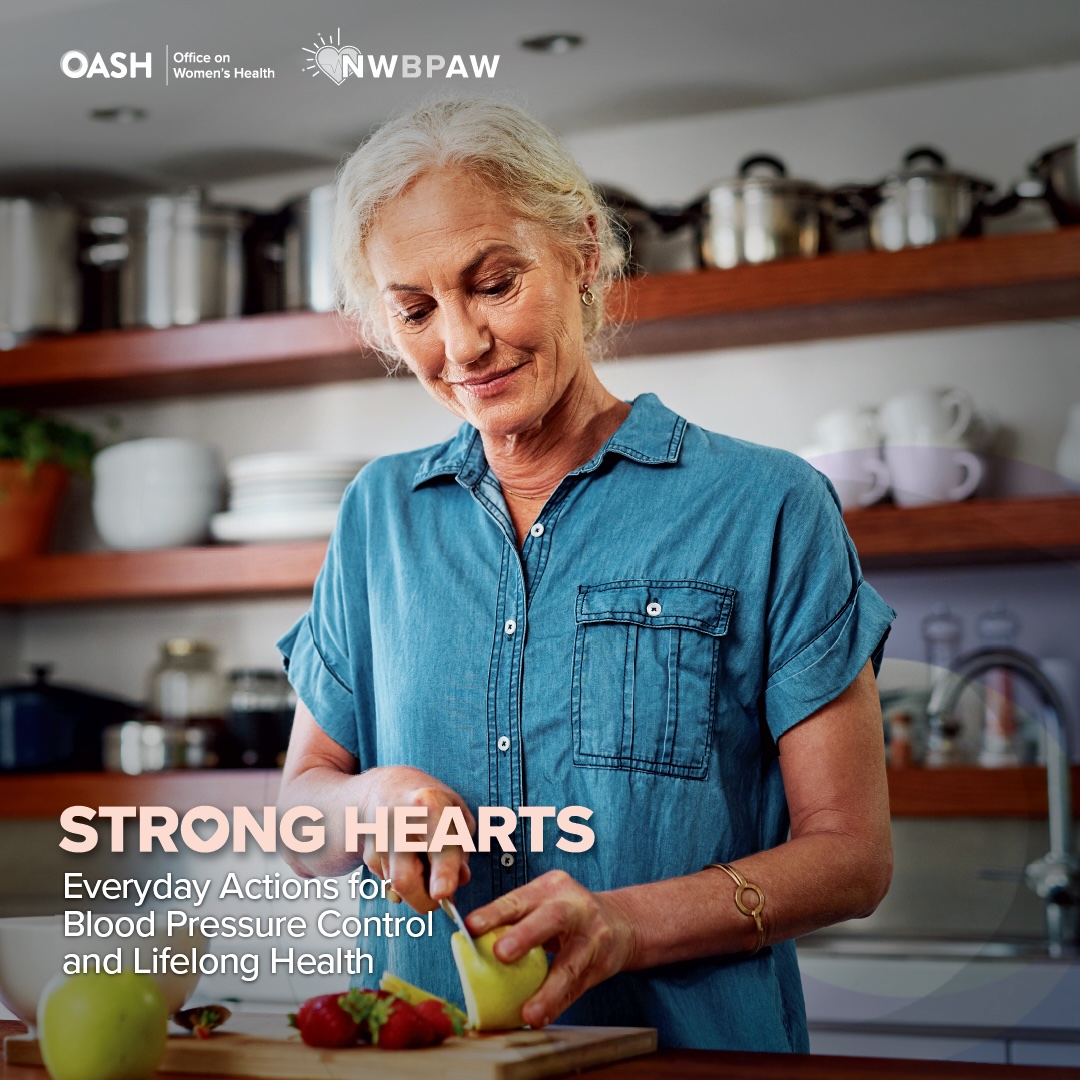 View image
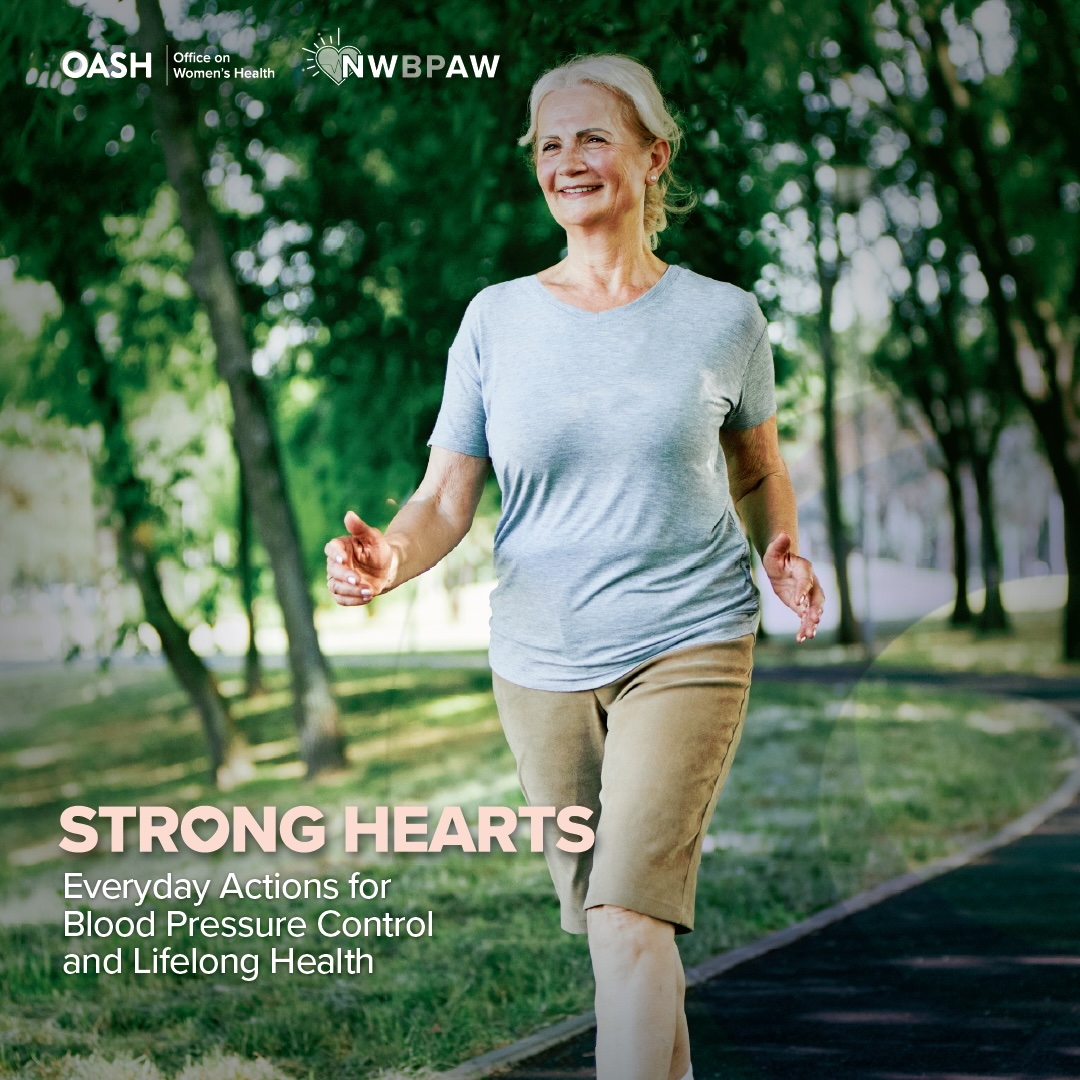 View image
Fact Sheet
Blood pressure increases with age, but there are times during a woman's life—pregnancy, the postpartum period, and perimenopause/menopause—when blood pressure can rise without symptoms, increasing the risk of cardiovascular problems. Access this educational fact sheet with information on the connection between high blood pressure and chronic disease.
 Healthy Blood Pressure: Preventing Chronic Disease